
A Lifetime of Learning: Brother Michael Laxner Publishes First Book After Decades of Study
Written by
Elizabeth Allouche
Published on
April 3, 2026
Updated on
April 6, 2026
For Michael R. Laxner (Loyola-Chicago ‘71), pursuing education was never confined to the classroom. It became a lifelong habit, one that ultimately led to the publication of his first book more than 50 years after his undergraduate experience.
His book, The Fundamental Problems of Our Times and Their Solutions, brings together decades of study across economics, philosophy, psychology, and emerging technologies. But the foundation for that work began much earlier, shaped by conversations, mentorship, and a mindset rooted in curiosity.
Laxner’s journey to Delta Sigma Phi started with a simple connection.
“I met one of the brothers during freshman orientation,” he said. “We became a team, and he eventually rushed me. That was it.”
During his time at Loyola, Laxner was balancing academics with working three jobs, but he remained deeply engaged in learning. One experience in particular left a lasting impression.
“I had a professor who could argue either side of an issue so well you never knew what he believed,” Laxner said. “No matter what argument we made, he would make it stronger and challenge it. That really pushed me to think differently.”
That exposure to new ideas and perspectives broadened his worldview and reinforced a habit that would define much of his life: questioning assumptions and thinking independently.
For Laxner, education didn’t end at graduation. In fact, it accelerated. At one point, he spent 15 years writing weekly book reports, exploring ideas across disciplines and sharing them with friends to spark discussion. Over time, those ideas began to take shape into something larger.
“I’m still reading,” he said. “You have to keep an open mind and continue to learn.”
That commitment to lifelong learning is reflected in the breadth of his studies, from business and economics to philosophy, wellness, and emerging technologies.
“Sometimes you want to stay in one area because you enjoy it,” Laxner said. “But you have to explore different things. That’s what broadens your horizons.”
While the book draws from Laxner’s own experiences and studies, its origins trace back to a promise he made years earlier.
As a young man, Laxner was part of a small group that regularly gathered to debate big ideas, encouraged by a mentor, Carl Ripoli, who challenged them to think independently and question authority. Ripoli had long intended to write a book but never completed it. Before his passing, Laxner made a promise to carry that idea forward.
“The title was his,” Laxner said. “The words are mine, but many of the ideas and authors I reference were ones he introduced to me.”
After decades of professional life, Laxner finally returned to that promise in retirement, dedicating himself to completing the work.
“When I finished the manuscript, I leaned back from my computer and said, ‘I’m done,’” he said. “Then I realized I wasn’t done. There was still so much more to do to get it published.”
At its core, Laxner hopes the book encourages readers to think differently and engage more deeply with the world around them. He points to the idea of the Gordian Knot, a symbol deeply rooted in Delta Sigma Phi’s history, as a guiding concept in his work.
Often used to represent solving complex or seemingly impossible problems through bold and unconventional thinking, the Gordian Knot reflects the same mindset Laxner brings to his writing.
“Some problems may seem unsolvable, but they can be solved,” he said. “It may just take a different way of looking at things.”
He also believes that kind of thinking starts with a willingness to listen and engage with differing perspectives.
“Keep an open mind,” he said. “Listen more than you speak. If your beliefs are challenged, that’s valuable.”
Reflecting on Delta Sigma Phi’s pillar of Pursue Education, Laxner sees it as a lifelong responsibility, one that requires both depth and range.
More than five decades after his time as an undergraduate, Laxner continues to approach the world with the same curiosity that first shaped his path.
“To continue to learn, to continue to open your mind to other things,” he said. “You need a full range of experiences to really understand the world.”
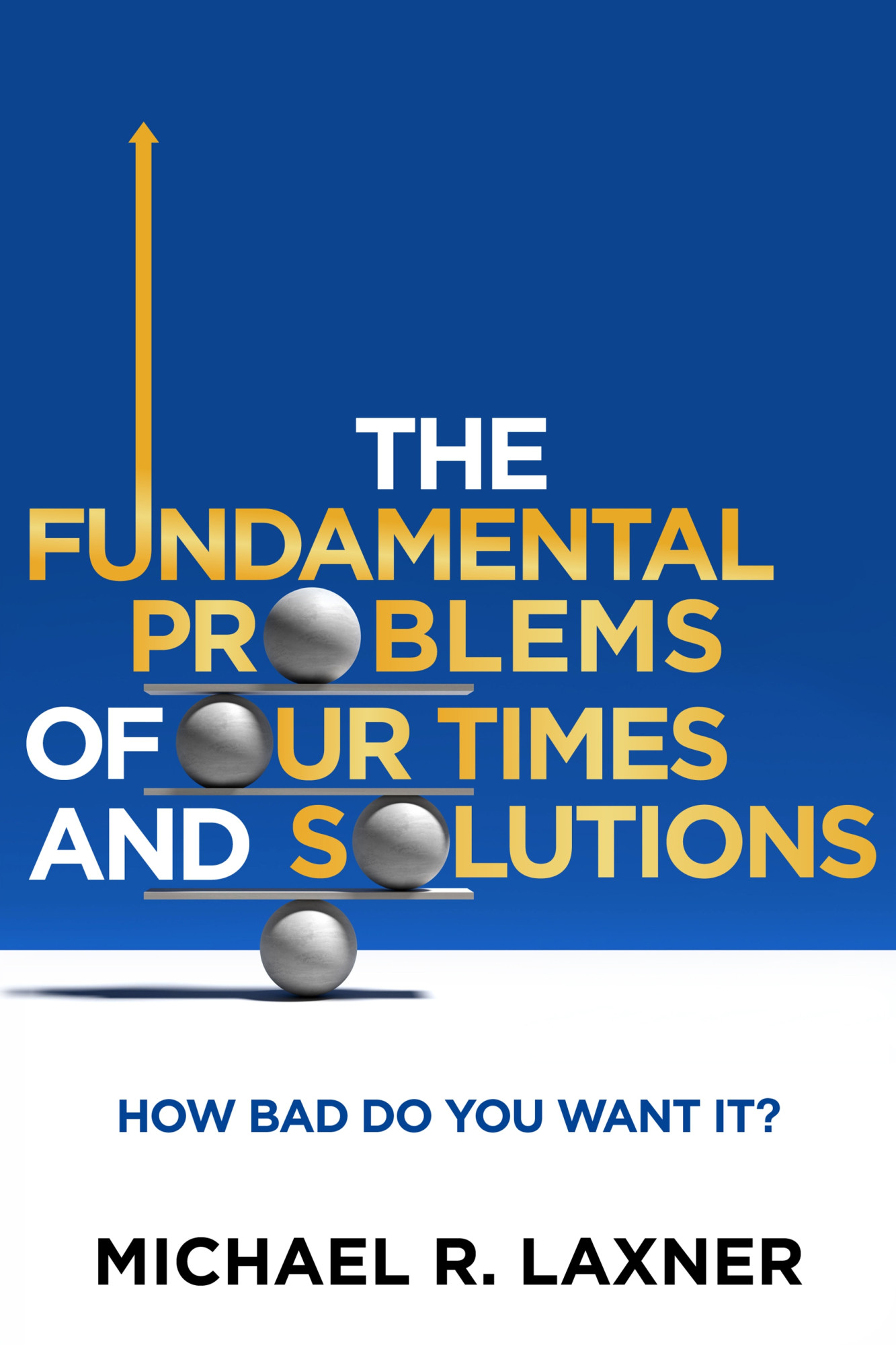
With his first book now published, that mindset has come full circle, from late-night conversations and big questions to a lifetime of learning captured in print.
The Fundamental Problems of Our Times and Their Solutions, released March 18, is available on Amazon in either hardcover or Kindle.