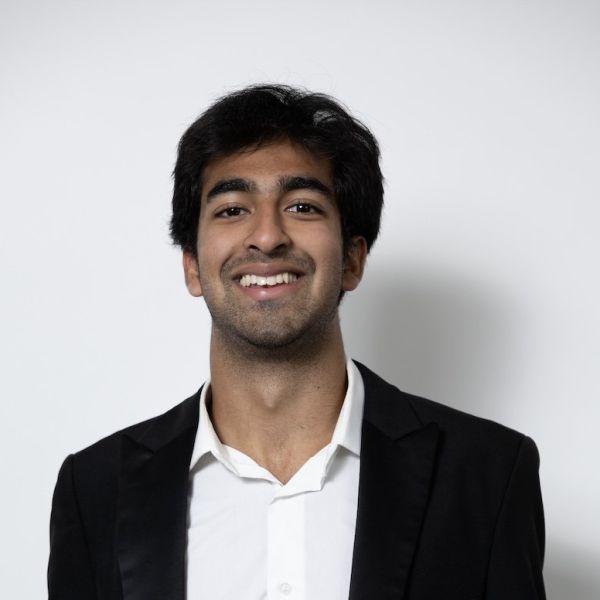
Rayan Tahir Puts AI to the Test in a Colorado Research Internship
Written by
Elizabeth Allouche
Published on
October 6, 2026
Updated on
October 6, 2026
Rayan Tahir, Cal Poly SLO '25, spent six weeks this summer working on a question that hospitals and tech companies are both asking right now: Can AI reliably predict future illness in patients?
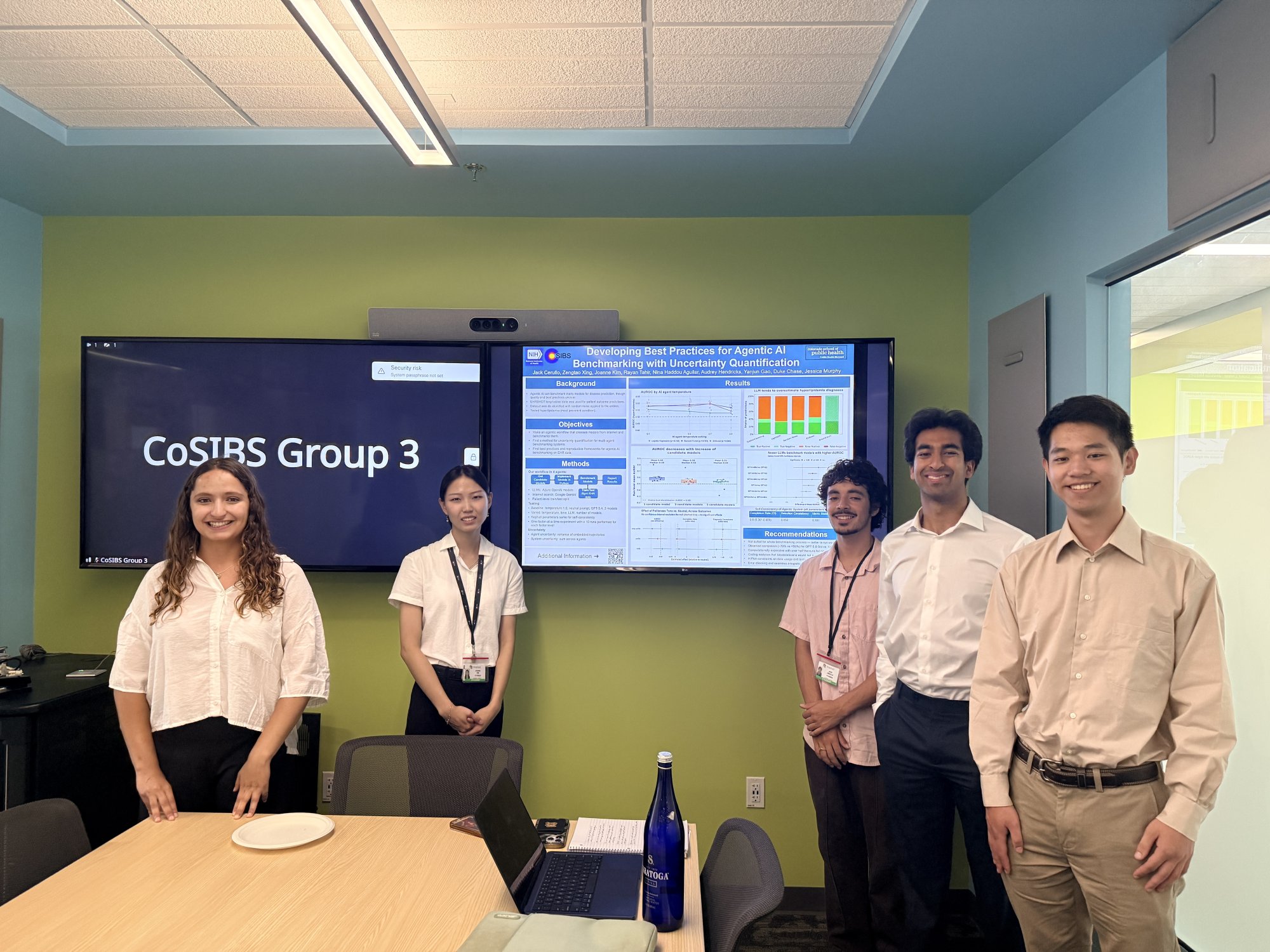
Rayan, a statistics major, took part in the Colorado Summer Institute in Biostatistics, a research program run with the Colorado School of Public Health and the CU Anschutz Medical Campus in Denver. He joined four other student interns and four faculty and hospital mentors on a project that gave AI tools de-identified patient health records and asked them to predict which patients had a common health condition. The team built a system where several AI agents worked in sequence, with one searching for prediction models, one writing the code to run them, one testing how well they performed, and one reporting the results.
The findings were not what anyone expected. The AI landed at about 60 percent accuracy, which Rayan says is close to flipping a coin. "Even with all the money and resources that go into these systems, it still wasn't that accurate," he said. The AI was good at one thing, though: explaining its own reasoning and documenting the models it chose. His takeaway is that it can speed up the work, but a medical professional has to stay in the loop. "It should all be under the view of a medical professional who understands what's going on," he said.
Getting those results took patience. The code was long and complicated, and the AI kept making coding mistakes that caused tests to fail. A few nights, Rayan kept his laptop awake and running while he slept so the tests could repeat on a loop. The other challenge was the team itself. The interns came from computer science, math, and statistics backgrounds, and not everyone had worked with AI or code before, so they had to learn together week by week. Rayan had more experience with coding and statistics than some of his teammates and ended up leading within the group, something he credits to his time in the Fraternity.
Delta Sig is where Rayan first found those leadership opportunities. He joined Cal Poly SLO's newer chapter because he liked the welcoming culture and wanted to help build something from the ground up. He has since served as social chair and now sits on the Interfraternity Council executive board, where he works on diversity, equity, and inclusion. "Once I got the opportunity, I was able to capitalize on it and become a leader within that space," he said of the internship. "My experience in my chapter really translated."
The summer ended with a presentation to faculty, staff, and medical professionals, some with more than 30 years in the field. With AI new to nearly everyone, Rayan said it was a unique experience to have seasoned professionals learning from sophomores. The research is continuing, and Rayan expects to be listed as an author when it is published as a paper.
The internship is already paying off as he looks toward life after graduation. Rayan is pursuing a career in technology, and he says the project has earned him interviews. "Everyone just wants to hear, 'Do you know how to use AI?'" he said. "I can tell them I know how it works on the back end." He is also building that toolkit through Delta Sig. Rayan attended the Career Accelerator in Seattle last year and has applied for this year's program in Houston.
Stories like Rayan's are a reminder of how many careers exist that most of us have never heard of. Building AI systems to test healthcare predictions is not a job many people knew existed a few years ago, and it is one a Delta Sig from San Luis Obispo is now helping shape. That is part of why Rayan wanted to share his story. AI can feel intimidating to walk into, he said, but "it's definitely doable, and you can make a great impact."
Between the internship and the Career Accelerator, Rayan is a clear example of the Launch Careers pillar: a brother finding out what is possible, picking up skills that employers want, and using the Fraternity's resources to prepare for what comes next.
Congratulations, Rayan, on a strong summer.